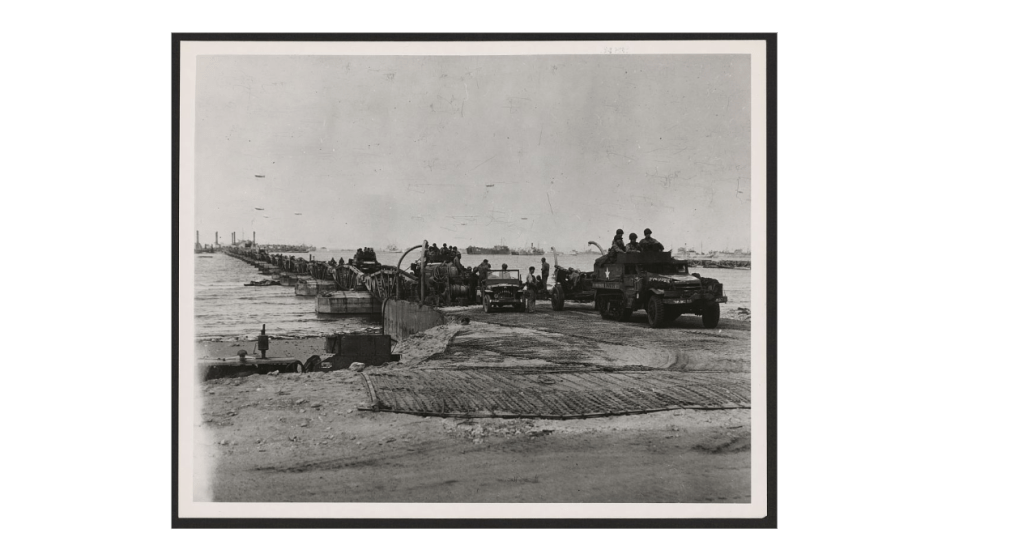
On June 6, 1944, the beaches of Normandy witnessed one of the most audacious military operations in history: D-Day. Amid the chaos, destruction, and heroism of the landings, one often-overlooked aspect made a critical contribution to the Allies’ victory—the Mulberry Harbors. These artificial ports, constructed under great secrecy and assembled off the coast of France, were engineering marvels that allowed the Allies to land the massive amounts of supplies and reinforcements needed to sustain their invasion.
While the Normandy beaches might be the focus of most D-Day stories, the history of the Mulberry Harbors is equally captivating, filled with innovation, unexpected challenges, and a touch of mystery.
~~~~~~~~~~~~~~~~~~~~~~~~~~~~~~~~~~~~~~~~~~~~~~~
The Origins of the Mulberry Harbors
The concept of the Mulberry Harbors came out of necessity. After the British disaster at Dieppe in 1942, Allied planners realized they couldn’t rely on capturing established ports in the early stages of a large-scale invasion. The Nazis fortified their ports heavily, and a direct assault would be costly. The solution? Build the ports themselves.
The name “Mulberry” is said to come from the shape of the floating harbors, which resembled the lobes of a mulberry leaf. These portable harbors were a combination of steel, concrete, and ingenuity, designed to be towed across the English Channel and then assembled off the Normandy coast.
A Masterpiece of Engineering
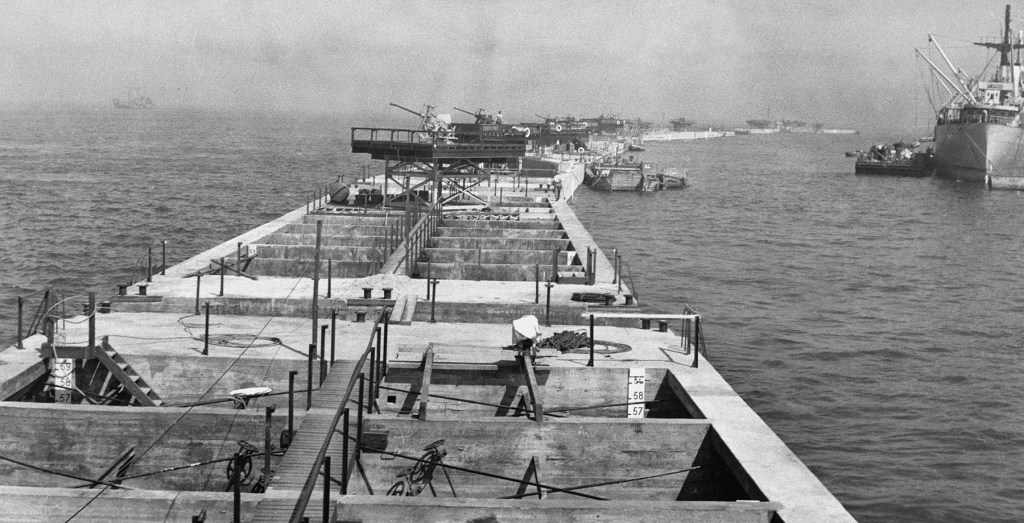
The sheer scale and complexity of the Mulberry Harbors are mind-boggling. Each harbor was roughly the size of Dover’s port and consisted of several key components:
- Phoenix Caissons: Giant concrete blocks that acted as breakwaters.
- Gooseberries: Sunk ships used to create additional barriers.
- Whale Floating Roadways: Long floating bridges to ferry supplies from ships to the beach.
- Spud Piers: Adjustable piers supported by spuds, which could adapt to the tides.
The Allies built two Mulberry Harbors, one at Gold Beach for the British and one at Omaha Beach for the Americans. These harbors allowed the Allies to land men, tanks, ammunition, and supplies even in the face of the often unpredictable Normandy weather, keeping the invasion well-supplied in its critical early days.
~~~~~~~~~~~~~~~~~~~~~~~~~~~~~~~~~~~~~~~~~~~~~~~~~~
Unknown Stories: The Stubborn Churchill and a Stormy Setback
Winston Churchill himself was a fierce proponent of the Mulberry Harbors. Known for his love of unconventional ideas, Churchill was so convinced that he reportedly refused to hear objections from naval experts who doubted their feasibility. It is said that during one heated meeting, Churchill sketched the rough idea of the harbor on a napkin, stressing the need for improvisation and ingenuity.
One of the lesser-known but most dramatic moments in the Mulberry Harbor story occurred on June 19, 1944, just 13 days after the harbors were deployed. A massive storm, one of the worst in 40 years, hit the Normandy coast, severely damaging the American Mulberry Harbor at Omaha Beach. In a twist of fate, the British harbor at Gold Beach survived relatively unscathed, and the decision was made to consolidate all efforts on this harbor, which became vital for sustaining the entire Allied push inland.
~~~~~~~~~~~~~~~~~~~~~~~~~~~~~~~~~~~~~~~~~~~~~~~~~~
Mulberry’s Mysteries: Forgotten Structures Beneath the Waves
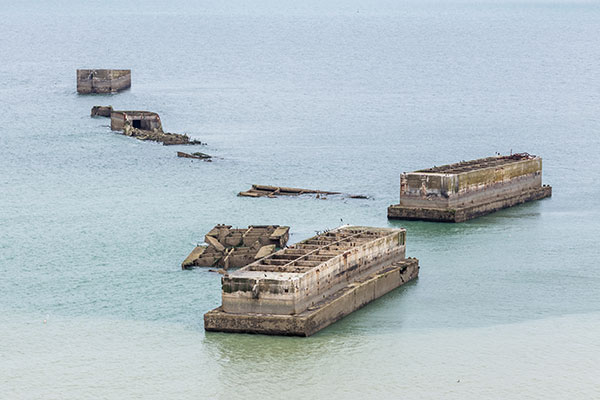
Though the Mulberry Harbors were meant to be temporary, some remnants still lie beneath the waters off the Normandy coast. Over the years, divers have uncovered forgotten pieces of the harbors—rusting breakwaters and half-buried piers that continue to tell the tale of this forgotten engineering marvel. Some parts of the harbors even washed up miles away along the French coast during storms in subsequent years, creating local legends and mysteries about what these strange structures were.
What’s more intriguing is that many of the Mulberry components were built in secrecy, scattered across shipyards in Britain. So secretive was the operation that many of the workers had no idea what they were actually building. Some reports even suggest that certain portions of the harbor were constructed under the guise of non-military projects to avoid German spies.
~~~~~~~~~~~~~~~~~~~~~~~~~~~~~~~~~~~~~~~~~~~~~~~~~~
The Lasting Legacy
Though the harbors were dismantled after the war, their impact was long-lasting. Historians often point out that without the Mulberries, the Normandy invasion could have easily faltered, prolonging the war. The harbors enabled the Allies to deliver approximately 2.5 million men, 500,000 vehicles, and 4 million tons of supplies within a few months of D-Day, overwhelming German defenses and hastening the liberation of France.
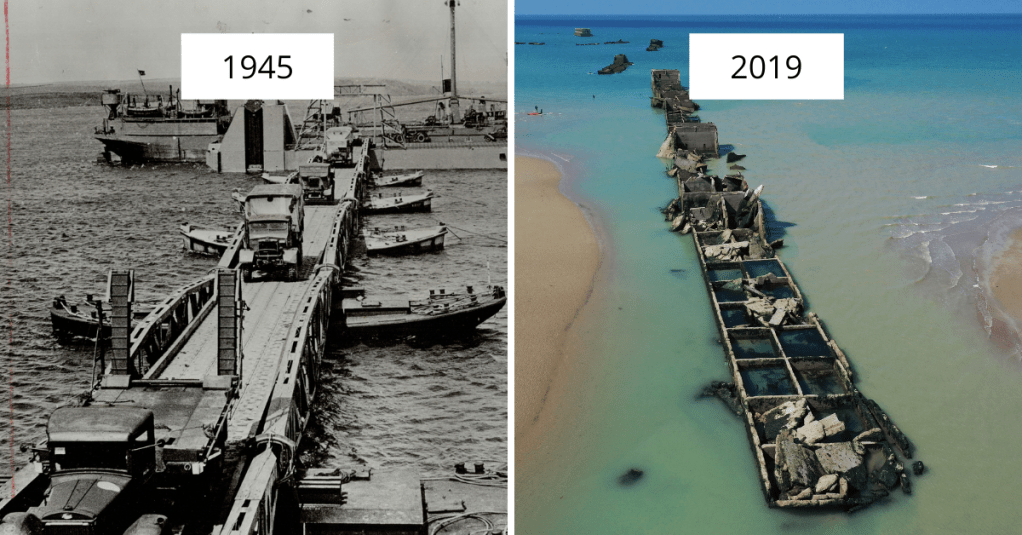
Photo Credit: Sean Gallup/Getty Images
Today, the remains of the Mulberry Harbors serve as a quiet reminder of the ingenuity and determination that shaped the outcome of the war. Museums and memorials in Normandy recount their story, but much of the harbors’ legacy lies beneath the surface, both in the waters off the coast and in the memories of those who built, sailed, and fought alongside them.
Conclusion: The Forgotten Heroes of D-Day
While the soldiers who stormed the beaches rightfully take their place as the heroes of D-Day, the Mulberry Harbors deserve their own recognition. These floating ports—part engineering feat, part logistical miracle—were the backbone of the invasion, enabling the Allies to maintain their crucial supply lines.
From Churchill’s tenacity to the unsung workers who built the harbors in secret, and from the forgotten remains that lie beneath the sea to the mysteries they still hold, the story of the Mulberry Harbors is one of quiet heroism and unmatched ingenuity. As we remember D-Day, we should also remember the structures that made victory possible, standing as a testament to human creativity and determination even in the darkest of times.
Sources:
- Mulberry: The Return to Normandy by Guy Hartcup
- Overlord: D-Day and the Battle for Normandy by Max Hastings
- The Mulberry Harbours: Logistics Over the Shore in World War II by Edwin P. Hoyt
- Neptune: The Allied Invasion of Europe and the D-Day Landings by Craig L. Symonds

 Historical Insight
Leave a comment